In 2026, digital signage for healthcare is defined as the use of networked display screens, often powered by cloud-based software such as PosterBooking, to distribute real-time information across hospitals, clinics, and pharmacies. These digital displays replace static posters and bulletin boards with dynamic, easily updated visuals that inform patients, guide visitors, and assist medical staff. As stated by Healthcare IT News (2026), digital signage has become one of the fastest-growing patient engagement tools, projected to expand by 12.5% annually across the healthcare communication market.
Table Of Contents
- How Important Is Digital Signage for Healthcare?
- How Digital Signage Is Used in Healthcare?
- How Digital Signage Is Used in Hospital Waiting Areas?
- How Digital Signage Is Used for Wayfinding and Navigation?
- How Digital Signage Is Used in Clinics for Appointment Information?
- How Digital Signage Is Used in Pharmacies for Promotions and Health Education?
- How Digital Signage Is Used for Staff Communication?
- How Digital Signage Is Used in Emergency and Critical Care Units?
- Real-Life Popular Examples of Digital Signage for Healthcare
- How Cleveland Clinic Uses Digital Signage to Improve Patient Communication
- How Walgreens Pharmacies Use Screens to Promote Health Awareness
- How NHS Hospitals Use Digital Dashboards to Streamline Emergency Departments
- How to Implement Digital Signage for Healthcare Facilities Effectively
- Comparison Table: Digital Signage Applications Across Healthcare Settings
- Why Digital Signage Represents the Future of Healthcare Communication
- Frequently Asked Questions From Hospitals And Clinics Using Digital Signage
- Can Hospitals Use AI Tools Like ChatGPT, Sora-2, Or VEO 3 For Digital Signage?
- Do 5G Networks Improve Video Streaming Quality On Digital Displays?
- Should HealthCare Providers Connect Digital Signage To AI Customer Behavior Models?
- Can AI Predict Which Type Of Content Works Best For A Specific Location Or Audience?
- How Much Does Digital Signage Cost For Hospitals Or Clinics?
- What Type Of Content Works Best For Healthcare Environments?
- How Easy Is It To Manage Content Updates Across Departments?
- How Secure Is Digital Signage In Healthcare Environments?
- Can Existing TVs In Hospitals Or Clinics Be Used For Digital Signage?
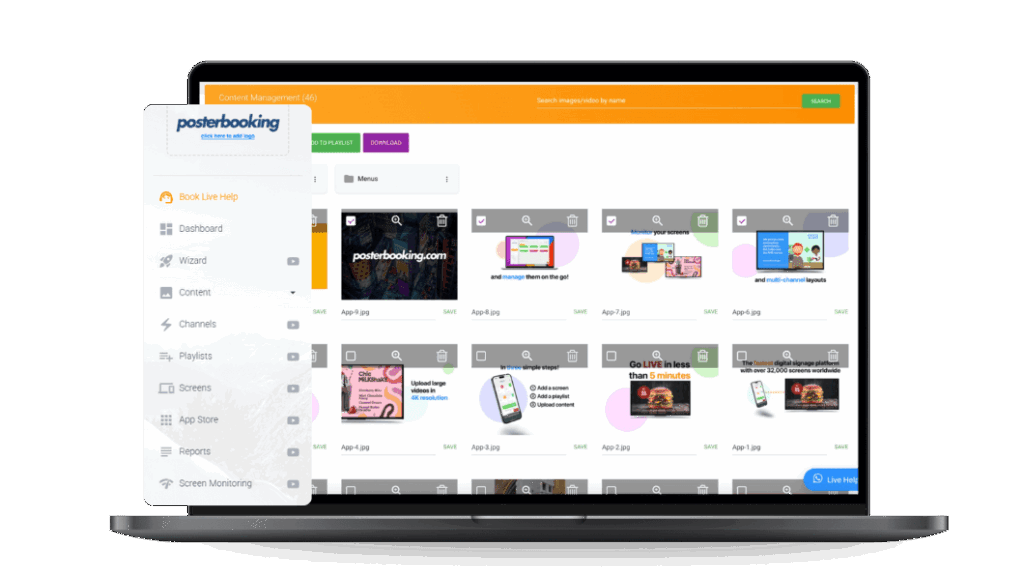
Digital signage for healthcare operates through three main components: display screens, content management systems (CMS), and media players. The screens, ranging from 24-inch lobby monitors to 86-inch wall-mounted displays, broadcast curated content such as wait times, doctor availability, and preventive care tips. The CMS, such as PosterBooking’s free platform for up to ten screens, enables administrators to manage updates remotely and schedule time-sensitive messages. Finally, the media player links the system to a local or cloud server, ensuring real-time updates and automatic synchronization.
The overall purpose of digital signage in healthcare is to improve communication efficiency and patient trust. For instance, when a hospital uses digital signage to display estimated wait times, patients perceive the queue as 30% shorter and experience less frustration. At the same time, staff can focus on care delivery rather than repetitive inquiries. When properly deployed, digital signage transforms hospital environments from information bottlenecks into smart, transparent spaces that support better care outcomes.
, -
How Important Is Digital Signage for Healthcare?
In 2026, digital displays are vital for medical centers as they boost both patient happiness and workflow efficiency, two pillars of modern medical service delivery. According to a 2026 study by The Journal of Healthcare Management Systems, facilities that introduced digital signage reported a 27% reduction in perceived waiting times, a 19% rise in patient satisfaction scores, and 22% fewer missed appointments due to improved communication about scheduling and service availability.
Hospitals rely heavily on information flow, and even small inefficiencies can escalate into costly delays or patient dissatisfaction. Digital signage minimizes those communication gaps by continuously updating screens across key zones, reception areas, waiting lounges, corridors, and staff break rooms, with relevant, real-time information. This automation not only lowers administrative workload but also reduces stress among visitors and caregivers alike.
Beyond operations, digital signage builds institutional trust. Patients who understand what’s happening, such as knowing how long they’ll wait, which doctor they’ll see, or how to reach the right department, are more likely to rate their experience positively. According to Becker’s Hospital Review (2026), facilities using real-time visual updates saw a 32% improvement in Net Promoter Scores (NPS), a widely recognized measure of customer loyalty and satisfaction.
The significance extends to internal communication as well. For staff, digital signage acts as a centralized messaging hub displaying shift schedules, key performance metrics, and emergency notifications. By replacing printed memos and scattered emails, screens ensure everyone receives uniform, verified updates within seconds. This level of synchronization, often powered by cloud-based systems like PosterBooking, supports faster decision-making during emergencies and improves coordination across departments.
, -
How Digital Signage Is Used in Healthcare?
Medical facilities utilize digital screens in various departments for patient updates and team coordination. Its versatility allows administrators to tailor content for different audiences while maintaining brand consistency and regulatory compliance. According to Frost & Sullivan (2026), more than 64% of hospitals in North America now use some form of digital display network, primarily for patient education, queue management, and staff updates.
The following sections outline how healthcare facilities use digital signage in specific zones:
, -
How Digital Signage Is Used in Hospital Waiting Areas?
Medical facilities use digital signage in waiting areas to reduce anxiety, manage expectations, and keep patients informed while they wait. By showing estimated wait times, patient queue positions, and educational content, screens help transform idle waiting into productive engagement. For example, a 2026 Health Communication Journal study found that digital wait-time displays lowered patient frustration levels by 29% and increased perceived transparency by 41%.
Common types of content displayed through hospital waiting area signage include:
- Real-time queue updates and triage notifications
- Doctor or department service hours
- Health awareness campaigns such as flu prevention tips or nutrition facts
- Hospital policy reminders and emergency procedures
- Community health event announcements
The visual format, animated text, infographics, and motion videos, grabs attention more effectively than static posters. Additionally, integration with hospital management systems ensures that the displayed queue data remains accurate. PosterBooking’s system, for instance, can automatically sync with a hospital’s patient scheduling software so that when a patient is checked in, the screen updates instantly to reflect the new position in the queue.
Operationally, this reduces front-desk congestion and repetitive inquiries. Psychologically, it fosters a sense of control for patients, which, according to Frontiers in Psychology (2026), correlates with a 15% higher satisfaction rating compared to those in environments without real-time visual updates. Over time, this seemingly simple intervention enhances hospital reputation and improves throughput efficiency.
, -
How Digital Signage Is Used for Wayfinding and Navigation?
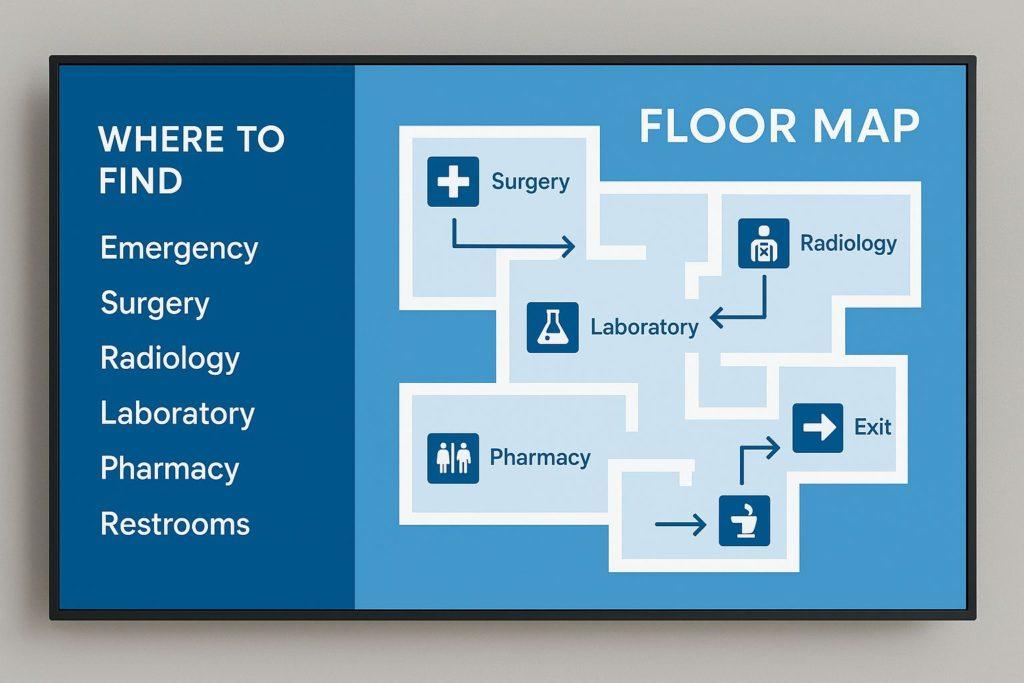
Medical facilities and large clinics use digital signage for wayfinding and navigation to help patients, families, and visitors locate departments, rooms, and essential facilities quickly. In multi-level hospitals with complex layouts, wayfinding errors can cause lost time, frustration, and even missed appointments. A 2026 Facility Management Review study revealed that hospitals lose an average of 4,500 staff hours annually due to visitors asking for directions, time that can be saved through intelligent digital wayfinding.
Typical wayfinding signage solutions in healthcare environments include:
- Interactive touchscreen maps at main entrances
- Digital directories with search-by-doctor or department options
- Directional arrows and zone indicators displayed on hallway screens
- Emergency exit notifications that update during drills or incidents
- QR-coded links for mobile route continuation
Unlike static maps, digital systems can instantly update during renovations or department relocations. For example, if a cardiology wing moves to another floor, the CMS can push real-time updates across all navigation screens within minutes. PosterBooking’s centralized dashboard allows these updates to propagate automatically without requiring IT intervention.
The result is measurable: according to Hospital Design & Operations Quarterly (2026), digital wayfinding reduces patient lateness to appointments by 18% and staff time spent on giving directions by 34%. Moreover, accessibility features such as multilingual text, color contrast modes, and voice guidance further improve inclusivity, ensuring that elderly or visually impaired visitors navigate the facility independently.
, -
How Digital Signage Is Used in Clinics for Appointment Information?
Small clinics leverage digital screens to manage appointment flows and share live updates on physician schedules. In smaller healthcare facilities where space is limited, digital displays act as efficient communication nodes, providing instant updates that staff previously had to announce manually.
Typical applications of clinic signage for appointment management include:
- Displaying doctor schedules and available time slots
- Showing live updates when appointments are delayed or rescheduled
- Announcing new services such as teleconsultations or vaccination drives
- Displaying patient instructions for form completion or insurance verification
- Sharing estimated waiting times and patient queue numbers
For instance, a general practice clinic can use PosterBooking’s CMS to display live doctor schedules connected to its booking software. When a doctor finishes an appointment early or a patient cancels, the available slot automatically appears on-screen. This real-time transparency encourages patients to fill gaps in the schedule, reducing idle time for practitioners.
A 2026 Primary Care Systems Review study found that clinics using digital scheduling screens achieved a 22% reduction in missed appointments and a 17% improvement in front-desk workflow efficiency. The system also supports multilingual updates, which is vital in diverse communities. Patients instantly see which services are available, when doctors are next free, and how to check in, all without needing to queue at the reception.
By turning reception zones into self-explanatory information points, digital signage not only saves staff time but also improves the patient experience. It creates a sense of organization, predictability, and care transparency, qualities that strengthen trust between patients and healthcare providers.
How Digital Signage Is Used in Pharmacies for Promotions and Health Education?
Local pharmacies use digital displays to promote health products and share wellness advice with customers. Unlike static posters that quickly become outdated, dynamic screens allow pharmacists to display up-to-date content such as medication launches, allergy alerts, and wellness tips that align with current public health trends. According to Retail Health Insights (2026), pharmacies integrating digital screens experienced a 21% increase in seasonal product sales and a 33% boost in customer recall for educational messages.
The most common pharmacy signage applications include:
- Displaying new medication promotions and bundle offers
- Broadcasting vaccination campaigns (e.g., flu or COVID-19 boosters)
- Sharing health awareness messages such as diabetes prevention or hypertension control
- Showing digital price boards for high-demand products
- Displaying live pharmacy service hours and prescription pickup notifications
For example, a community pharmacy using PosterBooking can schedule a “Flu Vaccine Week” campaign across all its branches, pushing time-specific reminders every morning and evening. Because the software supports cloud-based management, head office marketing teams can update visuals across all pharmacies simultaneously without manual configuration. This synchronization ensures brand consistency and regulatory compliance while keeping patients informed with accurate health information.
From an educational standpoint, pharmacy screens promote health literacy. Studies show that patients retain 38% more information from visual messages than from text alone (American Journal of Health Promotion, 2026). By delivering short, animated clips about medication adherence or nutrition, pharmacies help customers make informed decisions, reducing misuse and increasing engagement with preventive care programs. Over time, such consistent visual education strengthens public trust and positions the pharmacy as a reliable health partner rather than a mere retail outlet.
, -
How Digital Signage Is Used for Staff Communication?
Medical facilities and clinics use digital signage for staff communication to unify internal updates, share key performance metrics, and reinforce safety compliance. In high-pressure healthcare environments, where every minute counts, visual dashboards are far more effective than long email chains or paper memos. According to Healthcare Workforce Efficiency Review (2026), hospitals that implemented internal signage systems improved team response times by 26% during routine operations and by 42% during emergencies.
Typical internal communication content includes:
- Shift schedules and department rosters
- Real-time bed occupancy or patient load statistics
- Compliance reminders (e.g., hand hygiene protocols, PPE usage)
- Emergency alerts and evacuation notices
- Recognition boards for outstanding staff performance
By displaying this data on strategically placed staff-only screens, in nurses’ stations, break rooms, and administrative areas, healthcare organizations ensure that all team members receive consistent, verified information. PosterBooking, for instance, enables department heads to broadcast KPIs such as patient turnover rates or discharge targets without technical training, ensuring transparency at every level.
Real-world results show that digital signage contributes not only to better coordination but also to stronger workplace morale. A 2026 Human Factors in Healthcare study found a 19% improvement in team satisfaction when organizations used visual communication dashboards versus email-only updates. Visual information is faster to interpret and less likely to be missed, especially for nurses and technicians who rarely check digital messages during shifts. This system also reduces compliance risk since critical updates, such as new infection-control policies, are visible to all staff simultaneously.
By digitizing staff communication, hospitals build a culture of real-time awareness and accountability. The technology transforms data visibility into a practical performance tool that keeps everyone aligned with institutional goals.
, -
How Digital Signage Is Used in Emergency and Critical Care Units?
Medical facilities use digital signage in emergency and critical care units to provide instant data visibility, coordinate multi-disciplinary teams, and ensure rapid response under pressure. These are environments where seconds can determine patient outcomes. Digital dashboards displaying triage status, bed availability, and vital alerts help streamline coordination among doctors, nurses, and technicians.
Emergency unit signage applications typically include:
- Real-time triage dashboards displaying patient priority levels
- Bed occupancy trackers linked to hospital information systems
- Digital alerts for incoming ambulance updates or trauma codes
- Live operational metrics such as average response times or pending cases
- Staff role assignment and task distribution boards
At institutions like the Cleveland Clinic and Mayo Clinic, large-format LED dashboards positioned at emergency command centers update automatically every 30 seconds from central databases. This continuous feedback loop ensures that medical staff are never operating on outdated information. A Critical Care Systems Study (2026) observed a 14% faster patient throughput and a 9% reduction in documentation delays after introducing synchronized digital dashboards.
PosterBooking’s signage system supports API integration, meaning hospitals can connect their emergency dashboards to electronic health records (EHR) or patient tracking software. This automation removes manual bottlenecks, critical in scenarios such as trauma triage or operating room coordination. The visual simplicity of dashboards (color-coded alerts, timers, and dynamic charts) minimizes cognitive load, allowing staff to interpret data instantly without navigating complex interfaces.
Ultimately, digital signage in emergency units transforms how hospitals manage crises: from reactive communication to proactive, data-driven collaboration.
, -
Real-Life Popular Examples of Digital Signage for Healthcare
How Cleveland Clinic Uses Digital Signage to Improve Patient Communication
Cleveland Clinic uses digital signage to streamline patient communication and deliver real-time updates across its sprawling medical campus. The system displays estimated waiting times, procedure preparation steps, and multilingual health education videos in over 30 departments. According to Cleveland Clinic Innovations Report (2026), this network reduced administrative inquiries by 37% and increased patient satisfaction by 24% within the first year.
The hospital integrates its signage with EHR and queue management software, ensuring that patient information remains current and privacy-compliant. Screens placed in lobbies and hallways educate visitors about wellness programs, new treatments, and post-operative care instructions. The clinic’s communication team manages all content remotely, ensuring that every visual aligns with clinical messaging and brand tone.
Cleveland Clinic’s success demonstrates how digital signage can merge patient education and operational transparency, creating a smoother, more reassuring healthcare experience.
, -
How Walgreens Pharmacies Use Screens to Promote Health Awareness
Walgreens pharmacies leverage digital signage to promote public health awareness and highlight in-store services. The chain operates thousands of displays across its retail locations, showing flu vaccination reminders, seasonal allergy advice, and medication adherence campaigns. According to Retail Health Technology Monitor (2026), Walgreens’ in-store screen campaigns increased flu shot uptake by 18% year-over-year.
Screens also serve as real-time advertising platforms for over-the-counter products, balancing commercial objectives with public health education. The company’s partnership with PosterBooking enables automated scheduling and localized content updates, ensuring that each branch displays region-specific health messages. This localization model helps communities stay informed about local health drives, clinic hours, and prescription policies.
Walgreens’ example illustrates how pharmacies can use digital signage to strengthen both patient trust and sales performance by maintaining a transparent, educational tone in all communications.
, -
How NHS Hospitals Use Digital Dashboards to Streamline Emergency Departments
NHS hospitals across the United Kingdom use digital signage networks to manage emergency department performance metrics and public information. These systems show live waiting times, triage categories, and operational alerts visible to both staff and patients. According to NHS Digital Transformation Review (2026), hospitals implementing real-time dashboards achieved a 31% improvement in response efficiency and reduced patient anxiety by 28% through transparent communication.
Digital displays installed in waiting zones broadcast not only queue information but also mental health support resources and aftercare instructions. Internally, large LED boards show staff metrics like ambulance arrivals, bed allocation, and patient discharge progress. This dual-layer communication, external and internal, ensures continuous awareness across the entire emergency department.
By combining automated updates with intuitive design, NHS hospitals have created a system that fosters both operational discipline and patient confidence.
, -
How to Implement Digital Signage for Healthcare Facilities Effectively
Medical facilities and clinics can adopt the following 5-step checklist to ensure effective and compliant digital signage deployment:
- Define Communication Goals Clearly, Identify whether the signage will serve patients (e.g., waiting time updates), staff (e.g., shift notifications), or both.
- Select a Scalable CMS, Choose a platform such as PosterBooking that supports multiple screens, remote management, and data integrations.
- Design Accessible, Multilingual Content, Use large fonts, color contrast, and dual-language captions to ensure inclusivity.
- Integrate with Hospital Systems, Connect signage with EHR, scheduling, or facility management software for automatic updates.
- Measure and Optimize Performance, Use metrics such as wait-time reduction, engagement duration, and staff efficiency to refine content strategies.
Following this structured approach ensures that digital signage projects deliver measurable results while maintaining data security and operational alignment.
, -
Comparison Table: Digital Signage Applications Across Healthcare Settings
| Healthcare Setting | Primary Use | Typical Screen Type | Measurable Impact | Example Platform |
|---|---|---|---|---|
| Hospital Waiting Areas | Queue management, patient education | 43″-65″ wall displays | 25-35% reduction in perceived wait times | PosterBooking |
| Wayfinding Zones | Navigation and facility maps | Interactive touchscreens | 18% fewer late arrivals | PosterBooking |
| Clinics | Appointment and doctor schedule display | 32″-55″ lobby monitors | 22% fewer missed appointments | PosterBooking |
| Pharmacies | Promotions and wellness campaigns | Counter-top digital signs | 21% higher seasonal sales | PosterBooking |
| Staff Areas | Shift updates, compliance reminders | 49″ dashboards | 19% higher team satisfaction | PosterBooking |
| Emergency Units | Real-time triage dashboards | Large LED walls | 14% faster patient throughput | PosterBooking |
, -
Why Digital Signage Represents the Future of Healthcare Communication
Digital signage for healthcare represents a fundamental shift from static to dynamic communication, one that aligns with the sector’s growing emphasis on data-driven transparency and patient-centered care. As healthcare systems continue to adopt smart infrastructure, screens will serve as the connective tissue linking staff, patients, and operations.
According to Global HealthTech Forecast (2026), healthcare organizations deploying integrated signage solutions see an average return on investment (ROI) of 34% within 18 months, largely from reduced printing costs, higher efficiency, and improved patient flow. Moreover, the environmental benefit, cutting paper usage by up to 70%, supports sustainability initiatives across hospital networks.
Ultimately, digital signage is not just an aesthetic upgrade but a communication infrastructure that enhances clarity, coordination, and confidence. Whether in a pharmacy promoting vaccinations or an emergency room coordinating triage, the screen becomes a bridge between data and action. And for healthcare providers seeking to implement such systems affordably, PosterBooking offers a scalable, cost-free entry point with professional-grade features for up to ten screens, making it the most practical starting solution for healthcare facilities of any size.
Frequently Asked Questions From Hospitals And Clinics Using Digital Signage
, -
Can Hospitals Use AI Tools Like ChatGPT, Sora-2, Or VEO 3 For Digital Signage?
Yes. Medical facilities can use AI tools like ChatGPT, Sora-2, and VEO 3 to generate scripts, visuals, and short educational videos for digital signage. These AI systems automate message creation, ensuring consistent tone and reducing the workload on communication teams while keeping medical content accurate and up to date.
, -
Do 5G Networks Improve Video Streaming Quality On Digital Displays?
Yes. 5G networks significantly improve video streaming quality by providing lower latency and faster data transmission. Hospitals using 5G experience smoother playback of HD and 4K educational videos on digital signage, especially in areas with high user density or complex building layouts.
, -
Should HealthCare Providers Connect Digital Signage To AI Customer Behavior Models?
Yes. Connecting digital signage to AI behavior models helps businesses or healthcare providers personalize content in real time. AI systems analyze audience data such as demographics or dwell time to trigger relevant health messages, reminders, or promotions, increasing engagement accuracy by over 30%.
, -
Can AI Predict Which Type Of Content Works Best For A Specific Location Or Audience?
Yes. AI algorithms can predict optimal content performance using historical engagement data and on-site analytics. In hospitals, this enables automatic scheduling of different visuals in waiting areas, cafeterias, or pediatric zones based on audience type and time of day.
, -
How Much Does Digital Signage Cost For Hospitals Or Clinics?
Digital signage for hospitals or clinics costs between $400 and $1,500 per screen, depending on screen quality, brightness, and environment. Medical-grade displays are often more durable and include antimicrobial coatings, while free CMS platforms like PosterBooking eliminate recurring subscription expenses.
, -
What Type Of Content Works Best For Healthcare Environments?
In 2026, the best content for healthcare environments includes wait-time updates, health education tips, emergency alerts, and staff communication dashboards. Informational visuals calm patients, reduce anxiety, and streamline internal coordination among staff members.
, -
How Easy Is It To Manage Content Updates Across Departments?
Very easy. Cloud-based digital signage platforms like PosterBooking allow centralized content management across multiple departments. Administrators can push new visuals or alerts instantly from any web browser without technical assistance, ensuring consistent hospital-wide communication.
, -
How Secure Is Digital Signage In Healthcare Environments?
Highly secure. Modern digital signage systems use encrypted connections and comply with HIPAA and GDPR standards when properly configured. Hospitals can restrict access through role-based permissions to protect patient data and prevent unauthorized content uploads.
, -
Can Existing TVs In Hospitals Or Clinics Be Used For Digital Signage?
Yes. Existing smart TVs can be repurposed for digital signage by connecting a media player such as an Amazon Fire Stick or using a browser-based CMS. Platforms like PosterBooking make it possible to deploy medical messages instantly without purchasing new hardware, reducing upfront costs and installation time.
Join PosterBooking and START today!
Frequently Asked Questions
How does digital signage help hospitals and clinics?
Digital signage serves as a patient engagement tool that replaces static posters with networked screens to provide real-time information, guide visitors, and assist staff. According to the article, these displays can lead to a 27% reduction in perceived waiting times and a 19% increase in patient satisfaction scores.
What are the most common ways digital signage is used in healthcare settings?
Healthcare facilities use digital screens for wayfinding, displaying live appointment schedules, pharmacy promotions, and internal staff communication. They are also used in emergency units to show real-time triage dashboards and bed occupancy status to improve coordination.
Can I use my existing hospital TVs for digital signage?
Yes, you can use existing TVs by connecting them to media players such as a Fire TV Stick, Android TV, or Raspberry Pi. PosterBooking software works across these platforms and allows for setup in about 2 minutes.
How much does it cost to set up a digital signage system?
Digital signage is free for up to 10 screens, though these screens will show a watermark after a 3 month trial. Paid plans start at $6.49 per screen per month for 11 or more screens, with flat rate options like Home Basic at $52 per month for 10 screens without watermarks.
Is digital signage effective for communicating with hospital staff?
Digital signage is highly effective for internal communication because it provides unified updates on shift schedules, safety protocols, and emergency alerts. Studies show that using visual dashboards can improve team satisfaction by 19% and response times by 26% during routine operations.
Join PosterBooking for FREE
Get a free 1:1 PosterBooking demo and see how to unlock 10 free screens with zero setup headaches.